

Home › Articles › Pediatric Dentistry Pediatric Dentistry Your child’s first visit to the pediatric dentist: when to go and what to expect Dr Nantia Yfanti Pediatric dentist · 12 min read · July 2026 “When should I take my child to the pediatric dentist for the first time?” It’s one of the most common …


Pediatric Dentistry

Your child’s first visit to the pediatric dentist: when to go and what to expect

“When should I take my child to the pediatric dentist for the first time?” It’s one of the most common questions we get from parents, and the answer usually surprises them. The first visit happens much earlier than most people expect, and it has nothing to do with treatment. It’s about helping the child feel familiar and safe.
In this guide you’ll see exactly when the first visit should happen, why it matters so early, what will happen in the office, how to prepare your child and how often you need to come back.
The short answer
The first visit to the pediatric dentist is recommended by the child’s first birthday, or within six months of the first tooth coming in. It is a short, friendly get-to-know-you visit, with no pain and, in typical cases, without using any dental instruments. You could say it’s a visit to get the child used to the office, but also an information visit, mainly for the parents. Its purpose is to build a positive relationship with the pediatric dentist and to give parents the first basic guidance on oral hygiene and nutrition, so that prevention gets off to the right start from the beginning.
When exactly
The first teeth usually come in around the sixth month. The international rule, which we follow too, says this: the first visit to the pediatric dentist should take place by the child’s first birthday or within six months of the first tooth appearing.
You may hear that the first visit happens at age three. This confusion comes from the fact that the first fluoride application on the erupted teeth usually takes place around age three. By then, however, tooth decay that we could have prevented may already have appeared, or habits may have become established that negatively affect the teeth and jaw development, which will be harder to deal with later.
When teeth come in and when they change
A picture of the timeline helps parents know what to expect. The first teeth, usually the lower incisors, appear around the sixth to eighth month. Gradually, by about two and a half to three years, the full set of twenty baby teeth is complete.
At around age six, the baby teeth start being replaced by permanent ones. This doesn’t mean all the teeth will change at the same time. The change starts with the lower front teeth, and at about the same time the first permanent molars erupt, without replacing any baby tooth, behind the existing baby teeth. In this first phase of eruption, from six to eight years, the four upper and four lower teeth have changed. The second phase of change happens between the ages of nine and twelve.
Every child has their own pace, so small variations are normal. If something concerns you, a simple checkup is usually enough to put your mind at ease.
Why baby teeth matter
The most widespread misconception is that baby teeth don’t need care because they will be replaced. That isn’t true. Baby teeth stay in the mouth for a long time. For example, the first and second primary molars stay in the mouth until the age of eleven.
Baby teeth hold the space for the permanent teeth that are coming, help with chewing and proper nutrition, and play a role in speech and correct articulation. First of all, a cavity in a baby tooth progresses faster than in a permanent tooth. At the same time, as it progresses, it can cause pain, reach all the way to the nerve of the tooth and so affect the permanent tooth underneath. That’s why it is very important to take care of them, and it is certainly not true that “we don’t need to fix it since it will fall out anyway.”
What will happen at the first visit during the first year
The first visit is short and calm and is mainly preventive and advisory in nature. The goal is for the child to get to know the office and the team, while the parents receive the information they need for proper oral care from the very first months of life. It usually includes:
- time for the child to get used to the office environment and the team
- a short, painless examination of the teeth, gums, soft tissues and jaw development
- for infants, the “knee-to-knee” technique, where the parent holds the child on their lap, facing the pediatric dentist. This way the baby feels safe, since they stay in constant contact with the parent throughout the examination
- personalized advice on brushing and guidance on the proper use and gradual stopping of habits that can affect the development of the teeth and jaws (bottle, pacifier, thumb sucking, nighttime breastfeeding) when the right age comes, as well as advice on healthy eating habits
- information about teething, the use of fluoride toothpaste and scheduling the next preventive visits
No treatment is done at a typical first visit. Although the examination lasts only a few minutes, the specialized pediatric dentist can assess important aspects of the child’s oral health and development. The most important outcome is for the parent to leave fully informed and confident about caring for their child, and for the child to have had a pleasant first experience at the dentist, laying the foundation for a positive relationship with their oral health.
What will happen at the first fluoride treatment visit, at around age three
By age three, most children can cooperate well enough for a complete preventive visit. The goal is to create a positive experience, so the child feels comfortable at every future visit. The visit usually includes:
- getting to know and communicating with the child, always in a way suited to their age
- a clinical examination of all the teeth, the gums and the oral cavity
- an assessment of jaw development, the bite and tooth eruption
- a check for tooth decay or other problems that may need monitoring or treatment
- an assessment of the risk of tooth decay, taking into account the child’s eating habits, oral hygiene and medical history
- application of fluoride varnish to strengthen the teeth and protect them from decay
- personalized guidance for the parent on oral hygiene, nutrition and prevention, according to the child’s needs
- a discussion of any habits (pacifier, thumb sucking and others) that may affect the development of the teeth and jaws
- an update on the child’s oral health and scheduling of the next preventive visit
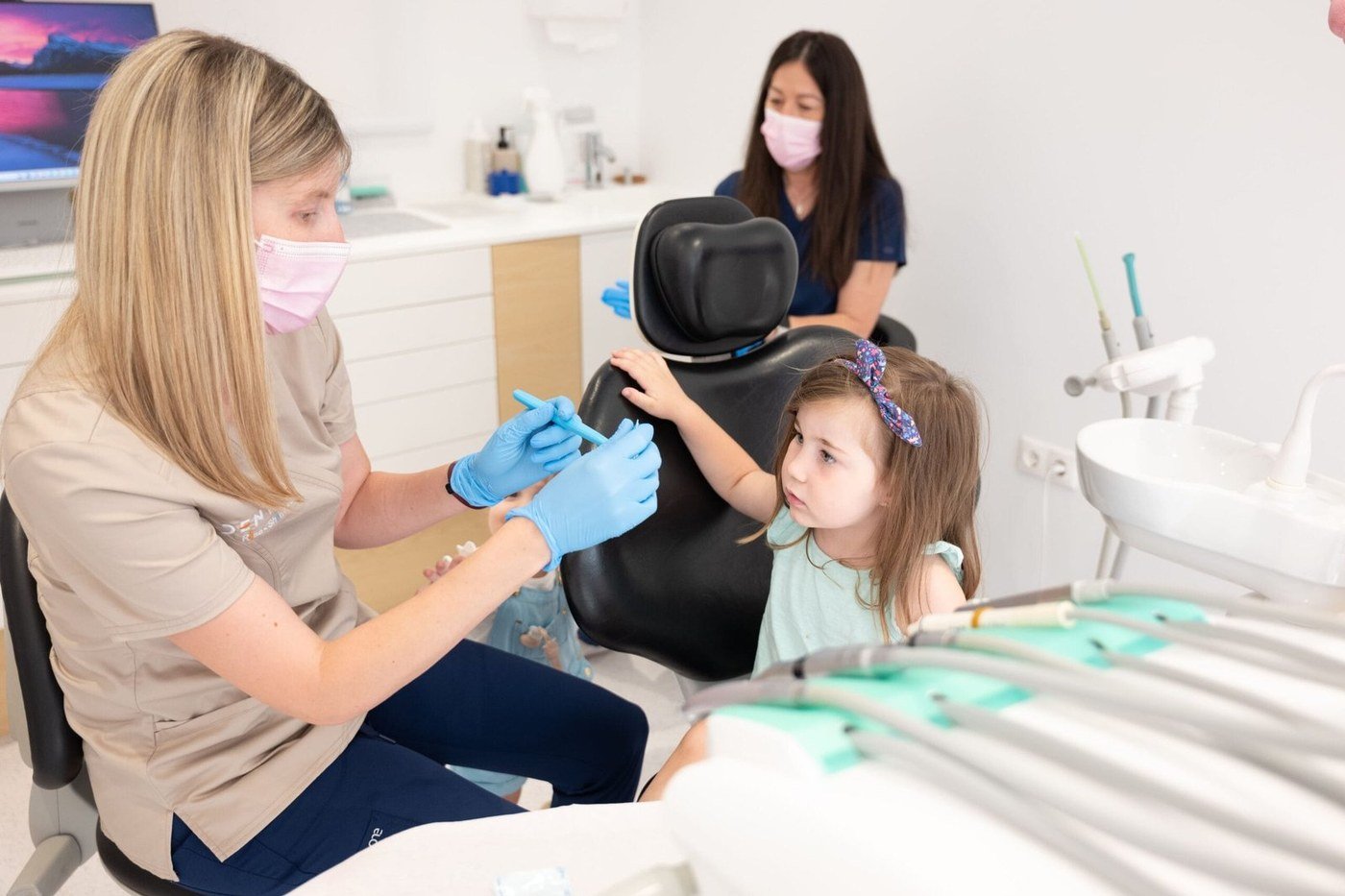
If we find that a tooth needs treatment, it usually isn’t done on the same day. First we inform the parent, discuss all the available options and schedule the treatment appointment. Before the first treatment, we take time so the child can get to know the basic instruments and materials that will be used. This reduces anxiety, and the child comes to the next visit calmer and more confident. At the end of the visit, of course, the child picks a small gift as a reward for their effort and participation.
How to prepare your child
Your attitude matters more than anything else, and a few small choices make a big difference:
- Speak in simple, positive words. Explain that you’ll go to the pediatric dentist to get to know each other, play in the waiting area, count their little teeth and learn how to take care of them properly.
- Avoid too many details. The dentist will explain the procedure in words suited to each age and in a way that is completely easy to understand.
- It is very important to trust the doctor you choose and let them build their own relationship with your child, one that will last for many years.
- Avoid phrases like “don’t be afraid, it won’t hurt.” Even so, you’re putting the idea of pain in their mind.
- Don’t mention words like injection, needle or prick at all. However much you believe your child isn’t afraid of them and that “you always tell them the truth,” it’s a mistake. We won’t lie, but we’ll do it in a way that won’t affect them negatively.
- Don’t pass on your own fear, and don’t share your own bad experiences.
- Choose a morning appointment, when your child is well rested.
- Choose encouragement over rewards. They’ll get a small gift from the dentist anyway, as a reward for their effort and participation in this new experience.
- Play “dentist” at home, with a mirror or a doll.
Every child adapts at their own pace and reacts differently to a new experience. Trust the pediatric dentist, stay calm and supportive, and let us guide the introduction and build a relationship of trust that will stay with your child for many years.
Fluoride, in moderation and the right way
Numerous scientific studies have shown that fluoride protects teeth from decay and is safe when used in the right amount and with the right products. The rule is simple:
- from the first tooth up to age six, toothpaste with 1000ppm fluoride, in an amount the size of a grain of rice
- from age six and up, toothpaste with 1450ppm fluoride, in a pea-sized amount
It’s good to supervise brushing, especially in the evening, until about age seven, and to teach your child to spit out the toothpaste instead of swallowing it. In the office we apply a protective fluoride varnish to the surfaces of the teeth, and this procedure is called a fluoride treatment.
How we clean teeth at every age
Care starts even before the first tooth comes in. You can gently clean your baby’s gums with a clean, damp gauze after feeding. As soon as the first little tooth appears, you move on to a small, soft toothbrush twice a day.
With young children, brushing is always done or supervised by the parent, because their little hands don’t yet have the dexterity to clean properly. A simple way is to stand behind your child and brush as you would your own teeth. In the evening, after brushing, there should be no food or drink, only water.
Watch out for baby bottle tooth decay and prolonged nighttime feeding
One of the most common causes of tooth decay in infants and very young children is prolonged exposure of the teeth to milk during the night, either from a bottle or from frequent nighttime breastfeeding, after the first teeth have come in.
When a child sleeps with a bottle in their mouth or drinks milk while sleeping, the milk stays around the teeth for a long time. At the same time, saliva production drops significantly at night, so the teeth are not adequately protected from the acids produced by bacteria.
For this reason, avoid putting your child to bed with a bottle containing milk or other sweet drinks. If they need a bottle in bed, it should contain only water. After the last meal of the day, gently clean the teeth and gums with gauze or a small toothbrush, depending on your child’s age.
The role of diet
Diet plays an important role in preventing tooth decay. What matters isn’t only how much sugar the child consumes, but mainly how often their teeth are exposed to it. Every time the child eats or drinks something containing sugar, the bacteria in the mouth produce acids that attack the teeth for about 20 to 30 minutes. When this happens many times a day, the teeth don’t have time to recover, and the risk of tooth decay increases.
Try to limit sweets to main meals and avoid constant snacking. Choose water instead of soft drinks and packaged juices, and sticky sweets and snacks are best eaten as rarely as possible, since they stay on the teeth longer. You don’t need to deprive your child of sweets. What makes the biggest difference is moderation, the right timing and daily care of the teeth.
How often after the first time
After the first visit, a preventive checkup every six months is recommended. That way we can monitor the development of the teeth and jaws, spot any problems early and apply the right preventive measures before treatment is needed.
When the first permanent molars come in, at around age six, we recommend applying pit and fissure sealants. This is a simple, quick and painless preventive treatment that protects the deep grooves of the teeth and significantly reduces the risk of tooth decay.
Our rule: the first visit is about trust, not treatment. A child who isn’t afraid of the dentist grows into an adult who takes care of their teeth.

Pediatric dentistry in Ilioupoli
At Dental-i in Ilioupoli, we believe that a child’s first contact with the dentist can shape their relationship with their oral health for life. That’s why every child is treated with time, patience and respect for their own pace.
We create a safe, friendly environment where the child gradually gets to know the office, the team and the pediatric dentist, while parents receive personalized guidance on prevention and proper care of the teeth at home.
Is it time for your child’s first visit?
Book a get-to-know-you appointment at Dental-i in Ilioupoli. Together we’ll lay the foundation for a healthy smile and make sure your child feels comfortable and builds a positive relationship with the dentist who will be with them throughout their life.
Frequently asked questions
By the first birthday, or within six months of the first tooth appearing. The first visit is preventive. Don’t wait for pain or a visible problem to appear, since tooth decay in its early stages often causes no symptoms at all.
Yes. Baby teeth stay in the mouth for several years, up to age 10 to 12. They hold the necessary space for the permanent teeth and help with chewing and speech, while a cavity in them can cause pain and infection and affect the development of the permanent tooth.
No. The first visit is a calm introduction to the pediatric dentist, focused on prevention, not treatment.
Talk positively about the visit, tell them the dentist will look at and count their little teeth, avoid words that cause fear and choose a morning appointment. Leave the rest to us.
From the first tooth up to age six, the size of a grain of rice. From age six and up, the size of a pea. Always with supervised brushing.
After the first visit, every six months, so we can catch any problems early and apply prevention.
Prolonged nighttime exposure of the teeth to milk, after the first teeth have come in, increases the risk of tooth decay. After the last meal, always clean your child’s teeth.
Usually around the sixth to eighth month, often starting with the lower incisors. Every child has their own pace.
With patience and consistency. Stand behind them, gently support their head and brush briefly twice a day. It gets easier when it’s a daily, playful routine.
Yes. A tooth with a cavity will definitely get worse if we don’t treat it. We don’t leave it on the reasoning that it will fall out. A cavity in a baby tooth can hurt, can become infected and can affect the permanent tooth coming in underneath.
Yes, in the amounts we recommend, the size of a grain of rice or a pea depending on age, it is safe. That’s why we always use a small amount of fluoride toothpaste and gradually teach the child to spit it out.
Dr Nantia Yfanti
Pediatric dentist (DDS, MSc) and co-founder of Dental-i in Ilioupoli. She specializes in the oral health of infants, children and teenagers, with an emphasis on prevention and on building a positive, fear-free relationship between the child and the dentist.


