Home › Articles › Implants Implants & Restorations How much does a dental implant cost in Greece? The complete 2026 price guide Dr Christos Vasilaras 10 min read · Updated June 2026 “How much does an implant cost?” It’s the first question we hear at almost every first appointment, and it makes complete sense. The …


Implants & Restorations

How much does a dental implant cost in Greece? The complete 2026 price guide

“How much does an implant cost?” It’s the first question we hear at almost every first appointment, and it makes complete sense. The thing is, the honest answer isn’t a single number but a cost range that depends on specific factors. Here we lay it all out transparently.
In this guide you’ll see how much an implant costs in Greece in 2026, why the price varies from case to case, what a proper quote absolutely must include, and how to tell whether a price is genuinely good or just cheap. Our goal isn’t to give you a number, but to help you make the right decision by understanding exactly what you’re paying for.
The short answer
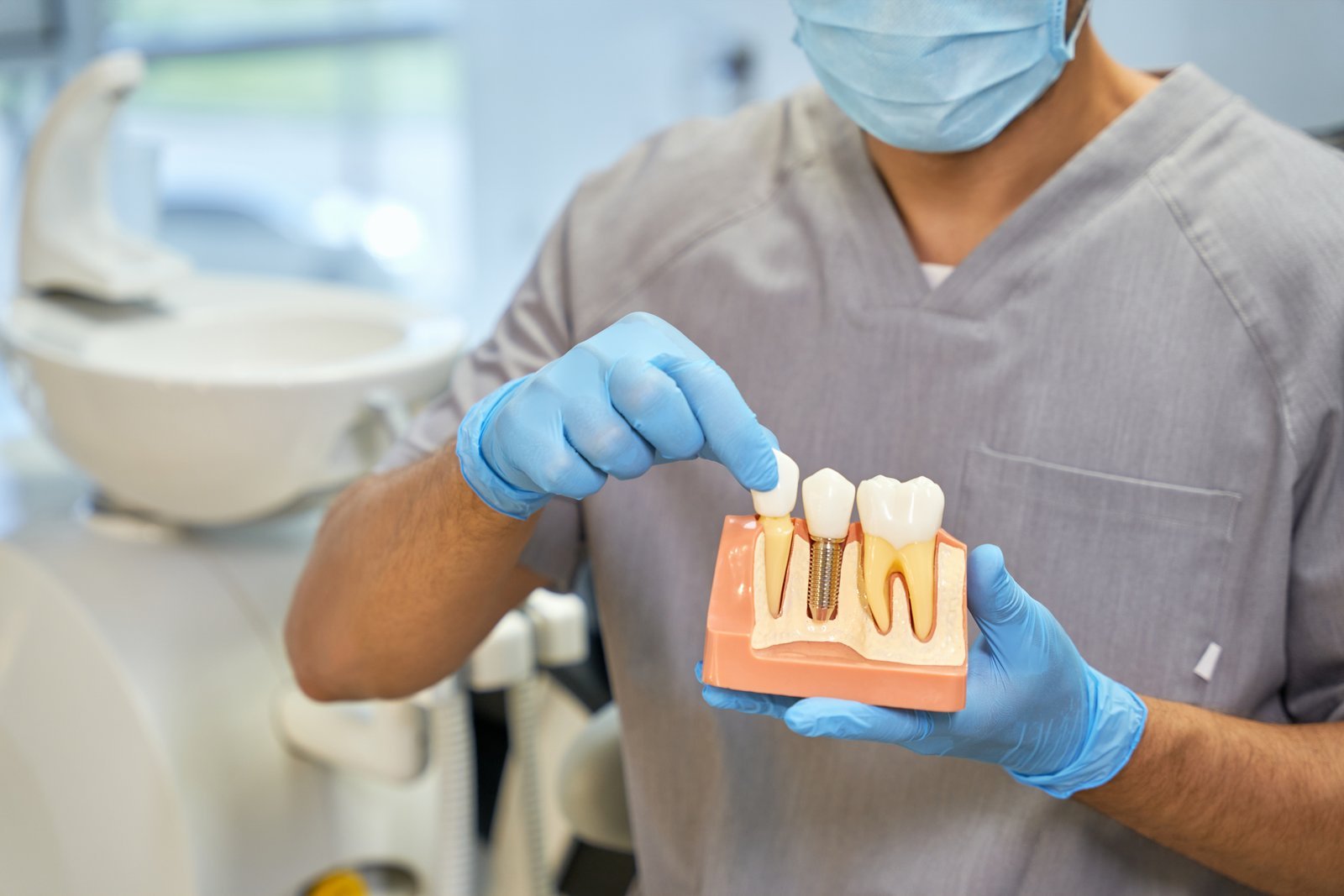
In Greece, the cost of a single implant ranges from €600 to €2,500 per tooth, depending on exactly what is included. To make it clearer, here is what each price tier means in practice:
| What it includes | Indicative cost |
|---|---|
| Dental implant only (titanium screw) | €600 to €1,200 |
| Implant with crown, complete restoration of one tooth | €1,000 to €2,500 |
| Premium implant (e.g. Straumann) with zirconia crown | €1,800 and up |
| Bone graft, where needed | €100 to €600 |
| Sinus lift, where needed | €500 to €1,500 |
| Full-arch restoration (e.g. All-on-4) | €6,000 to €12,000 per arch |
All prices are indicative for the Greek market in 2026. The final cost is always determined after a clinical examination and X-rays.
Notice how big the price gap is between “dental implant only” and “complete restoration.” This is where most misunderstandings begin: a quote that looks impressively low often covers only the screw and not the crown, the abutment or the necessary procedures. That’s why the only price that matters is the total one, the one that gives you a tooth ready to function.
Why there is no single price: the 6 factors
Two patients with the same missing tooth may receive completely different quotes, and both can be correct. The reason is that the cost isn’t a number from a price list, but the sum of six factors.
1
The implant brand and type
Cost differences relate to the company and the implant system used. Each company offers different levels of clinical evidence, technology, support and availability of components, all of which affect the final price.
2
The crown material
A porcelain-fused-to-metal crown costs less than a zirconia crown. Zirconia gives a more natural, more esthetic result, especially on the front teeth, and that’s why it raises the final cost.
3
The need for a bone graft
If the bone has receded where the tooth is missing, a graft is needed so it can safely receive the implant. It usually adds €100 to €600 to the total, depending on the extent of the bone loss.
4
The need for a sinus lift
In the upper jaw, near the back molars, a sinus lift may be required in order to create bone. It is a specialized procedure that costs from €500 to €1,500.
5
The complexity of the case
A single tooth is simpler than multiple implants or a full restoration. The more teeth involved and the more complex the case, the more the overall plan and cost change.
6
Equipment and experience
3D CT scanning, guided surgical placement and the team’s experience raise the cost, but they drastically reduce the risk and extend the life of the implant.
How many implants do I really need?
A common misconception is that you need one implant for every missing tooth. That isn’t true, and it significantly changes the total cost.
- For a single gap, yes, you need one implant with one crown.
- For 3 or more missing teeth in a row, 2 implants supporting a bridge between them are often enough. So you need 2 implants, not 3.
- A whole jaw without teeth doesn’t need 14 implants. Solutions such as All-on-4 or All-on-6 attach a complete, fixed restoration to just 4 to 6 implants.
That’s why the initial assessment is so important. The right planning can give you the same result with fewer implants, and therefore a lower cost, without sacrificing long-term viability.
The stages and timeline of implant treatment
Many patients think an implant is placed in a single visit. In reality it is a gradual process that spreads over a few months, and that works in your favor, because it gives the bone time to “bond” firmly around the implant.
- Assessment and planning. Clinical examination, 3D CT scan and a written treatment plan with the cost.
- Implant placement. One session under local anesthesia, usually 30 to 60 minutes for one tooth.
- Osseointegration. The period during which the implant integrates into the bone, usually 2 to 4 months. A temporary solution is usually used during this time.
- Crown. Once the implant has “bonded,” the permanent crown is placed and the tooth functions normally.
The cost you saw above covers this entire process, not just the day of the surgery.
Why the cheapest implant often ends up costing more
We completely understand the temptation to choose the lowest quote. But with implants, the cheapest option is often the most expensive, because the real cost shows over the years.
An implant of unknown origin, without proper planning or without enough bone, has a higher chance of inflammation or failure. When that happens, the cost of corrective surgery, removal and re-placement far exceeds the difference saved at the start. The same applies to most cases of dental tourism: the initial price looks attractive, but follow-up, corrections and the warranty become difficult when the dentist is in another country.
Our rule: don’t compare prices, compare what each price includes. A “cheap” implant that hasn’t been properly planned, or that doesn’t include a crown or a warranty, isn’t cheaper, it’s simply incomplete.
What a proper price should include
When you receive a quote, ask to see a detailed breakdown of what it covers. A complete implant price should normally include:
- The first clinical examination and treatment planning
- The 3D CT scan and X-rays
- The implant’s identification, the specific type and serial number
- The surgical placement
- The abutment and the crown, with the material stated
- Follow-up appointments after placement
- The warranty and support policy
If any of these is missing from the quote, it doesn’t necessarily mean something is wrong. It does mean, however, that it may cost you extra in the future, and it’s good to know that from the start.
Implant, bridge or denture? What pays off in the long run
An implant isn’t the only option for a missing tooth. A bridge and a partial denture usually cost less up front, which is why they seem attractive. The picture changes, though, when you look at the total cost and the benefits over the long term.
A bridge requires grinding down the two neighboring teeth, even if they are healthy, and usually needs replacing after some years. A denture is more economical as an initial option, but it doesn’t stop bone loss over the years, and quite a few patients struggle with how it fits.
An implant doesn’t affect the neighboring teeth and helps preserve the bone in the area where it is placed. With proper care it lasts for decades, so its real annual cost often proves lower than other options that look cheaper today. We will soon break down this comparison in a separate article.
Is an implant covered by insurance or EOPYY?
In most cases, dental implants are not covered by EOPYY. Some private insurance policies offer partial coverage for prosthetic work, with annual limits. If you have private insurance, it’s worth checking your policy before you start, so you know what part of the cost may be reimbursed. We provide all the receipts and documents you need for your insurance.
Implants in installments
An implant is an investment that lasts for decades, but that doesn’t mean it has to be paid all at once. At Dental-i we spread the cost over the course of treatment, so it fits your budget without compromising on quality. We discuss the specific options at the initial assessment, once we’ve first made clear which solution you really need.
How to make your implant last for decades
An implant can’t get cavities, but the gums and bone around it need care just like any natural tooth. To make your implant last as long as possible:
- Brush twice a day and use floss or an interdental brush.
- Have a professional cleaning and checkup twice a year.
- Avoid smoking, which is the number one risk factor for implant failure.
- If you grind your teeth at night, discuss whether you need a protective night guard.
Maintenance costs very little compared with the implant itself, and it is what protects your investment over time.

How much does an implant cost in Ilioupoli?
In Ilioupoli and the southern suburbs, prices fall within the ranges you saw above. What changes from one dental practice to another isn’t so much the price as the hands-on execution, the experience, the equipment and the solution that suits each patient.
At Dental-i we always start with a comprehensive assessment: a clinical examination, 3D imaging and a clear, written plan that shows in detail what is included and how much it costs, with no hidden charges. That way you leave your first appointment knowing exactly the total cost, before you make any decision.
Want a clear price for your own case?
Book an initial assessment at Dental-i in Ilioupoli. We’ll examine the tooth, explain your options, and you’ll leave with a written, transparent cost plan.
Frequently asked questions
The cost of a single implant ranges from about €600 to €2,500 per tooth. The range depends on whether we count only the implant body or the complete restoration with the crown, on the implant brand and on any additional procedures. The final cost is determined after a clinical examination.
Because two quotes with the same title can include completely different things. The implant brand, the crown material, the need for a graft or sinus lift, the complexity and the practice’s equipment all play a role.
Generally, implants are not covered by EOPYY. Some private plans offer partial coverage for prosthetic work, so it’s worth checking your policy before you start.
With proper placement, good oral hygiene and regular checkups, an implant can last for decades. The crown on top may need replacing sooner, depending on wear.
The placement is done under local anesthesia, and most patients feel no pain during it. In the following days there may be mild swelling or sensitivity, which passes with simple painkillers.
Yes. We offer installment payment options so the cost is spread over the course of treatment. We discuss the options at the initial assessment.
Founder and lead dentist of Dental-i, with a master’s degree (MSc) in Prosthodontics from the University of Siena and 25+ years of clinical experience in Restorative Dentistry and Implantology. He served as a clinical instructor at the School of Dentistry of the University of Athens and is a member of the European Society of Cosmetic Dentistry.