

Home › Articles › Prevention Prevention Teeth cleaning: how often you need it and why Dr Christos Vasilaras Dentist · 8 min read · August 2026 “I brush every day, do I really need a cleaning?” It is a very reasonable question, and the answer is yes. However well you brush, there are spots your …


Prevention

Teeth cleaning: how often you need it and why

“I brush every day, do I really need a cleaning?” It is a very reasonable question, and the answer is yes. However well you brush, there are spots your toothbrush can’t reach, and a hard deposit, tartar, that won’t come off with brushing no matter how hard you try.
In this guide you will see exactly what a professional cleaning is, how often you need one, why brushing isn’t enough, whether it wears down your teeth and how it differs from whitening.
The short answer
For most people, a professional cleaning is recommended every six months. People who have gum problems, smoke, wear braces or have implants may need it more often, every three or four months. It removes the plaque and tartar that brushing leaves behind, and it prevents gingivitis, periodontitis and tooth decay.
Plaque and tartar: what’s the difference
To understand why brushing isn’t enough, we need to tell two things apart. Dental plaque is a soft, sticky layer of bacteria that forms on the teeth all the time. Brushing and flossing remove it. But when plaque is left in place, within a few days it is calcified by the minerals in saliva and turns into tartar. Once it hardens, a toothbrush can’t remove it; a professional instrument is needed. Tartar also forms below the gums, where no brush can reach, no matter how well you clean.
How do I know I need a cleaning
Your mouth often gives you signs before your calendar reminds you. It’s worth booking an appointment when you notice:
- yellowish or brownish deposits near the gums, especially behind the lower front teeth
- gums that bleed when you brush or floss
- persistent bad breath or a bad taste
- red, swollen or tender gums
- a rough feeling when you run your tongue over your teeth
None of these is normal, and all of them improve with a cleaning and proper care. And if you have no symptoms at all, even better. Regular cleanings help keep it that way.
What a cleaning involves
An in-office cleaning usually includes:
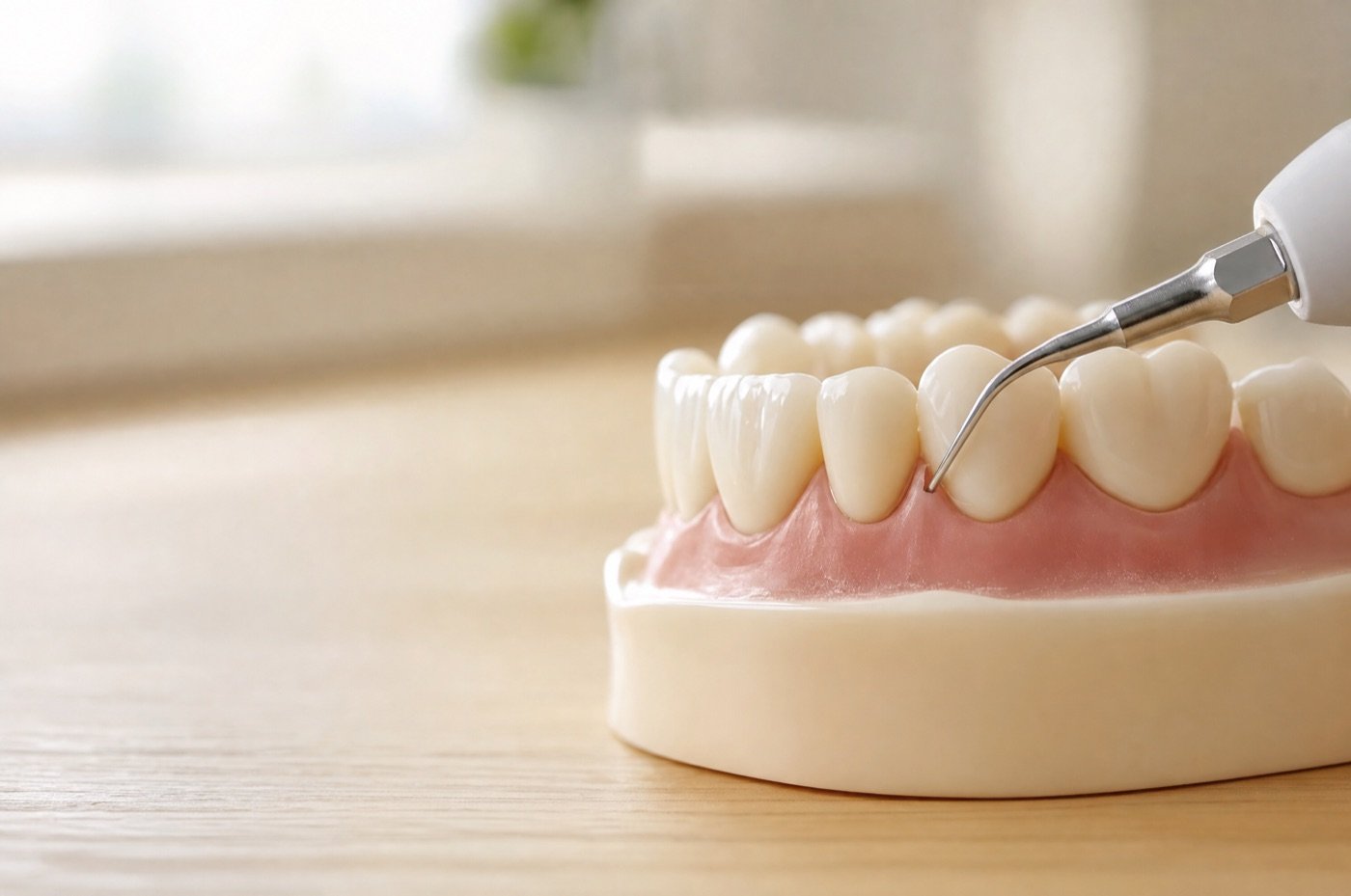
- removing tartar with an ultrasonic scaler, a device that “breaks it up” with vibrations without wearing down the enamel
- hand instruments for the smaller remnants
- polishing, which leaves a smooth surface so new plaque has a harder time sticking
- in some cases, cleaning by air polishing with bicarbonate powder, known as Air Flow, for surface stains from coffee, tea or smoking
Air polishing is complementary. It does not replace ultrasonic scaling for hard or subgingival tartar.
How often you need it
The general rule is every six months, together with your regular checkup. Some cases need it more often, every three or four months:
- when there is gingivitis or periodontitis
- in smokers
- in people who have implants or wear braces
- in diabetes and during pregnancy, when the gums become more sensitive
For patients with periodontitis, European clinical guidelines recommend individualized supportive care intervals, from three to twelve months, depending on each person’s risk. We decide the right frequency for you together, based on the condition of your gums.
Why brushing isn’t enough
When tartar is left in place, it collects more bacteria and irritates the gums. This is how gingivitis starts, with red gums that bleed when you brush. At this stage the problem is still reversible. But if it is left untreated, it progresses to periodontitis, which destroys the bone around the teeth and cannot be reversed. At the end of this chain come loose teeth and tooth loss. Regular cleaning stops the chain at the start, while there is still time.
Gingivitis and periodontitis: where the line is
It’s worth telling apart two conditions that are often confused. Gingivitis is inflammation of the gums, with redness and bleeding, and it is fully reversible. With a cleaning and good oral hygiene at home, the gums recover. But if the inflammation persists, it moves on to periodontitis, which affects the bone that supports the tooth. This loss cannot be reversed, but it can be stopped and kept under control when we catch it early. One insidious factor is smoking, which limits bleeding and so hides the signs, letting periodontitis progress silently. That is why regular checkups matter even more for smokers.
Regular and deep cleaning: what’s the difference
Not all cleanings are the same. A regular, preventive cleaning deals with the tartar and plaque above and slightly below the gums, in a mouth without serious problems. But when there is periodontitis and the tartar has spread deep below the gums, a deep cleaning is needed, known as root planing. In that case we clean the roots inside the periodontal pockets, often under local anesthesia and over more than one session. Which of the two you need is shown by examining your gums, not by the clock.
What to do at home between cleanings
The in-office cleaning and care at home are two parts of the same job. One does not replace the other. Between appointments, a few habits make the biggest difference:
- brush twice a day, with gentle movements, for two minutes
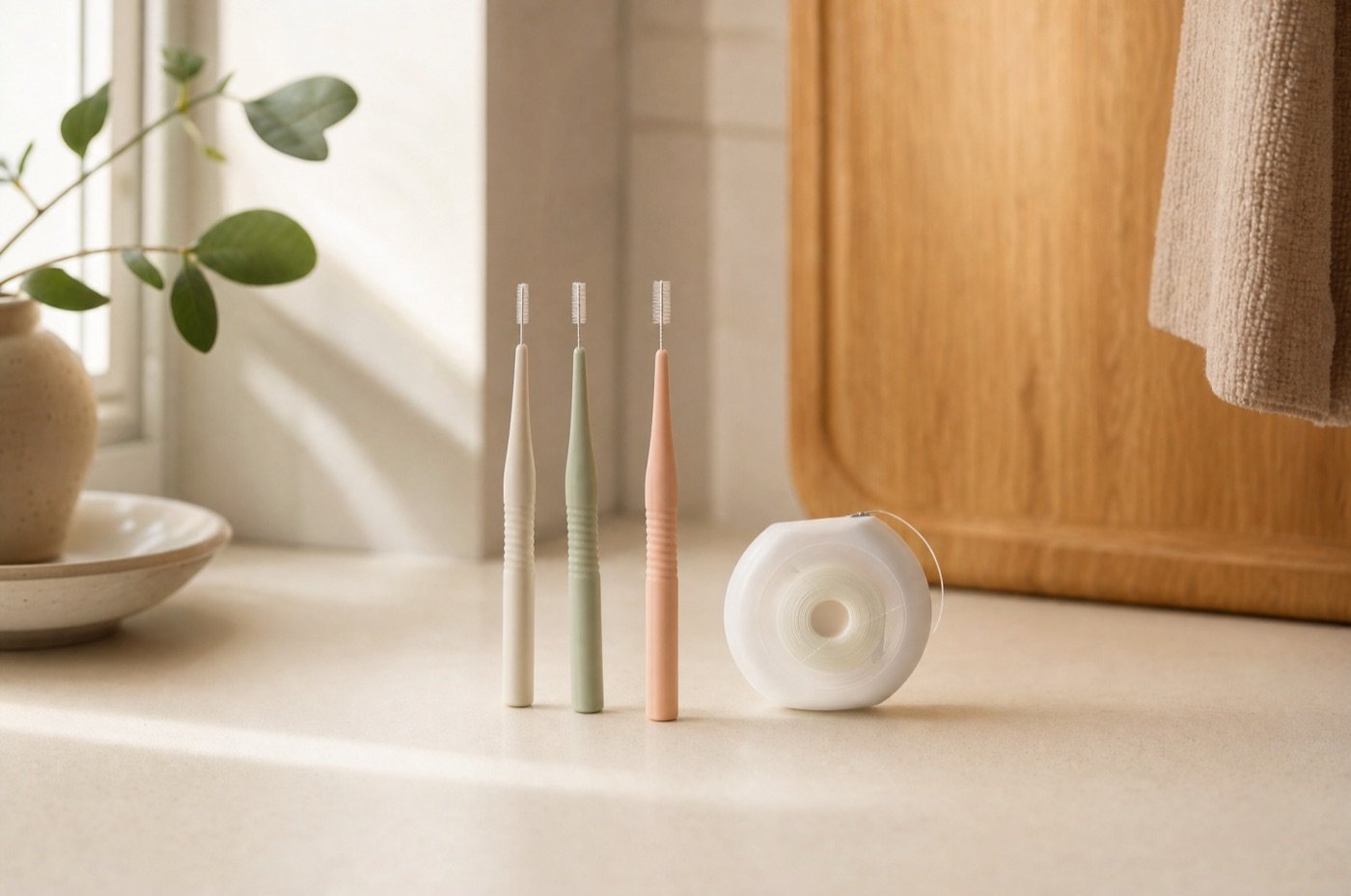
- clean between your teeth daily, with dental floss or an interdental brush, where the toothbrush can’t reach
- an electric toothbrush helps many people clean more effectively
- mouthwash is a supplement, not a substitute for mechanical cleaning
The goal is not for plaque never to form, which is impossible, but for it never to have time to turn into tartar.
The myths we hear most often
There are quite a few misconceptions about cleanings that are worth clearing up:
- “It wears down the enamel.” Not true. Ultrasonic scaling removes tartar without affecting the enamel.
- “It loosens the teeth or opens up gaps.” Not true. If you notice gaps or loose teeth, it was the tartar and the inflammation that were hiding them. The cleaning revealed damage that already existed; it did not cause it.
- “Tartar protects the tooth.” The opposite is true. Tartar leads to periodontitis and tooth loss.
- “It hurts.” A typical cleaning is painless. There may be some discomfort only when the gums are already inflamed, or during a deep cleaning, where we can use local anesthesia.
Cleaning with braces or implants
Some cases need a little extra attention. Plaque builds up more easily around braces, so cleanings are done more often and with special instruments. With implants, the gums and the bone around them need care just like any natural tooth, with a gentle, suitable cleaning so that their surface is not damaged. In both cases, we set the right frequency and method together with you, according to your needs.
A cleaning is not whitening
Many people expect bright white teeth after a cleaning. A cleaning removes stains and deposits and restores the natural shade of your teeth. They look whiter because they are clean, not because they were whitened. Whitening is a different procedure, which changes the shade of the tooth itself. If you want teeth whiter than their natural shade, we cover it in our article on whitening.
Our rule: a cleaning is the most affordable dental procedure, and it prevents the most expensive ones. Half an hour every six months saves you gum and tooth treatments in the future.
Teeth cleaning in Ilioupoli
At Dental-i, in Ilioupoli, a cleaning is not just tartar removal. We combine it with a checkup of your gums and teeth, so that we can spot any problem early and treat it before it grows.
When did you last have a cleaning?
If it has been more than six months, book an appointment at Dental-i in Ilioupoli for a cleaning and a gum checkup.
Frequently asked questions
For most people, every six months. With gum problems, smoking, braces or implants, every three or four months.
A typical cleaning is painless. There may be mild sensitivity when the gums are already inflamed.
No. It does not wear down the enamel or loosen the teeth. It simply removes the tartar and the inflammation that were burdening them.
A cleaning restores the natural shade by removing stains and tartar. For a result whiter than the natural shade, you need whitening.
No, it is a sign of gingivitis. A cleaning and a checkup help treat it early.
Yes. Brushing removes plaque, not tartar that has already hardened, and it does not reach below the gums.
A mixture of air, water and fine powder that removes surface stains. It is complementary and does not replace ultrasonic scaling for tartar.
Yes. Plaque builds up more easily around braces, so we usually recommend more frequent cleanings for as long as treatment lasts.
Yes. Plaque forms all the time and, if it is left in place, it hardens into tartar again. That is why cleanings are repeated regularly and combined with good care at home.
Mild, temporary sensitivity is possible in the first few days, especially if there was already inflammation or exposed roots. It subsides quickly.
Dr Christos Vasilaras
Dentist and co-founder of Dental-i in Ilioupoli. He focuses on cosmetic and restorative dentistry, with an emphasis on results that look natural and stand the test of time.

