A Permanent Solution for Replacing Teeth
Dental implants are the modern and most reliable solution for replacing one or more missing teeth. At Dental-i we use digital planning, guided placement and high-precision restorations for a natural, long-lasting result.
What Are Dental Implants?
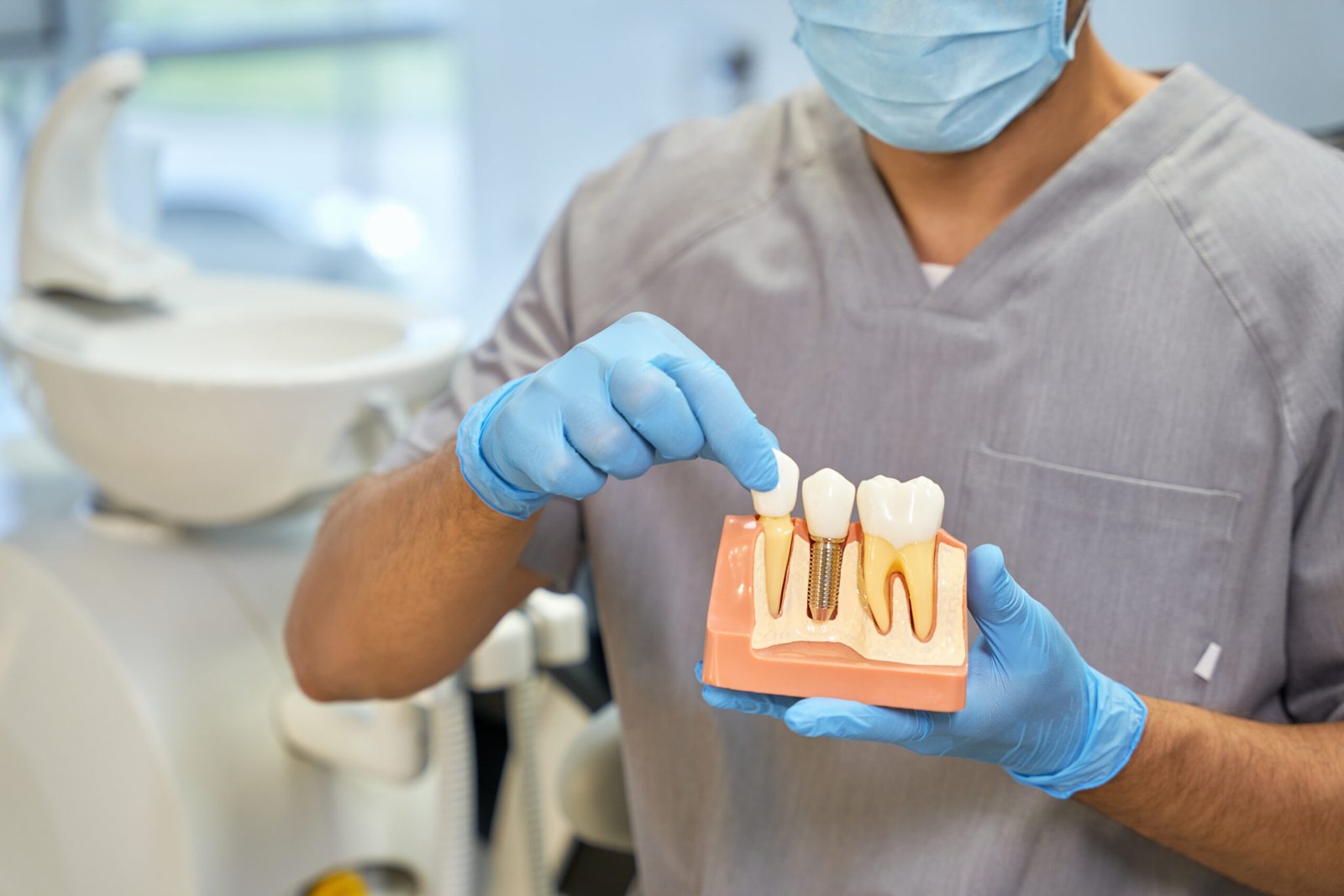
Titanium dental implants act as artificial roots that are placed in the jawbone and support crowns, bridges or full-arch restorations. Through the process of osseointegration, the implant becomes fully integrated into the bone, providing stability and a natural feel when chewing.
Types of Dental Implants and Restorations
Dental implants fall into the following categories:
Single Tooth Implant
A dental implant for a single tooth is the ideal solution when a single tooth has been lost due to decay, trauma or extraction. Instead of grinding down the neighboring teeth as with a conventional bridge, the implant stands on its own, leaving the natural dentition intact. With proper planning and digital guidance, a completely natural esthetic and functional result is achieved.
Implants for Multiple Teeth
When two or more teeth have been lost, multiple dental implants can support fixed bridges without the need for removable restorations. This solution offers high chewing stability, restores speech and protects the bone from further resorption. The number of implants is determined based on a digital assessment and three-dimensional imaging (CBCT).
Full-Arch Restoration (All-on-4 / All-on-6)
Full-arch restoration with implants is intended for patients with extensive tooth loss or severe tooth mobility. With techniques such as All-on-4 or All-on-6, implants are strategically placed to support a complete, fixed restoration. The method offers a dramatic improvement in quality of life, with a natural feel and a high degree of esthetic harmony.
Immediate Implant Loading (Same Day Implants)
In selected cases, the immediate implant loading technique is used, in which a temporary restoration is placed on the same day as the surgical procedure. The procedure requires strict stability criteria and a proper assessment of bone sufficiency. This approach shortens treatment time and allows the patient to return to their daily activities sooner.
Regain Your Smile Safely
Our team combines surgical precision, digital technology and personalized care for predictable, long-lasting results.
Benefits of Dental Implants
Dental implants are considered today the most advanced and biologically compatible solution for replacing missing teeth. They offer long-term stability, high esthetics and a significant improvement in the function of the oral cavity.
Dental implants are a permanent restoration for missing teeth, offering excellent stability and durability over time. Unlike removable dentures or bridges, they integrate into the bone and function as a natural root, ensuring secure chewing and long-term function.
Thanks to the process of osseointegration, the implant becomes one with the jawbone, offering a feel and function similar to a natural tooth. Speech, chewing and everyday comfort are fully restored, without shifting or discomfort.
After a tooth is lost, the jawbone gradually begins to resorb. Dental implants stimulate the bone just like a natural root, helping preserve bone mass and prevent changes to the contour of the face.
The restoration of missing teeth with implants improves not only oral health but also the appearance of the smile. Natural esthetics and stability provide security in social and professional life, substantially boosting self-confidence.
When Are They Recommended?
When there is:
• Loss of a single tooth
• Loss of multiple teeth
• Complete edentulism
• Intolerance to removable dentures
• Need for esthetic restoration of the front teeth
Frequently Asked Questions About Dental Implants
Does getting an implant hurt?
The placement of a dental implant is carried out under local anesthesia and is a fully controlled procedure. Most patients report that the experience is similar to, or even milder than, a simple tooth extraction. After surgery, mild swelling or sensitivity may occur for a few days, which is easily managed with the appropriate instructions and medication.
How long does a dental implant last?
Titanium dental implants have a high success rate and can last for decades, even a lifetime, when accompanied by proper oral hygiene and regular checkups. Long-term stability depends on factors such as bone quality, the patient’s general health and consistency with follow-up.
When can I eat after implant placement?
After the placement of a dental implant, a soft, lukewarm diet is recommended for the first 24–48 hours (e.g. soups, yogurt, mashed potatoes, eggs). We avoid hard, crunchy or very hot foods so that the surgical site is protected. Full chewing returns gradually, depending on the protocol being followed. In cases of immediate loading, you can chew carefully within a few days, always following your dentist’s instructions.
Are implants suitable for everyone?
Suitability for dental implants is assessed individually through a clinical examination and three-dimensional imaging (CBCT). In most cases, even when there is bone loss, techniques such as bone grafting or sinus lift can be applied. Patients with controlled diabetes mellitus or other systemic conditions can also undergo treatment, following a proper medical evaluation.
What is the difference between a bridge and an implant?
A dental bridge is supported by the adjacent teeth, which are ground down to support the restoration. In contrast, a dental implant is placed in the bone and functions on its own, without affecting healthy teeth. At the same time, it helps preserve bone mass and offers greater long-term stability.
What is the cost of dental implants?
The cost depends on the number of implants, the type of prosthetic restoration (single tooth, bridge or full-arch), as well as any additional procedures such as bone grafting. After a thorough diagnosis, a personalized treatment plan and cost information are provided with complete transparency.
Our Office